Carmel Movers
Essential DIY Packing Tips for Moving
Essential DIY Packing Tips for Moving: Best Materials, Fragile Item Care, and Organization Strategies
Moving can be daunting, but with the right packing strategies, it can become manageable and even enjoyable. This guide will provide you with essential DIY packing tips, focusing on the best materials, how to care for fragile items, and effective organization strategies. Many people struggle to pack efficiently, which can cause stress and damage to their belongings. By following these tips, you can ensure a smoother moving process and protect your valuables. We will cover the best packing materials, techniques for safely packing fragile items, a comprehensive packing checklist, tips for choosing the right box sizes, and effective packing hacks.
What Are the Best Packing Materials for Moving?
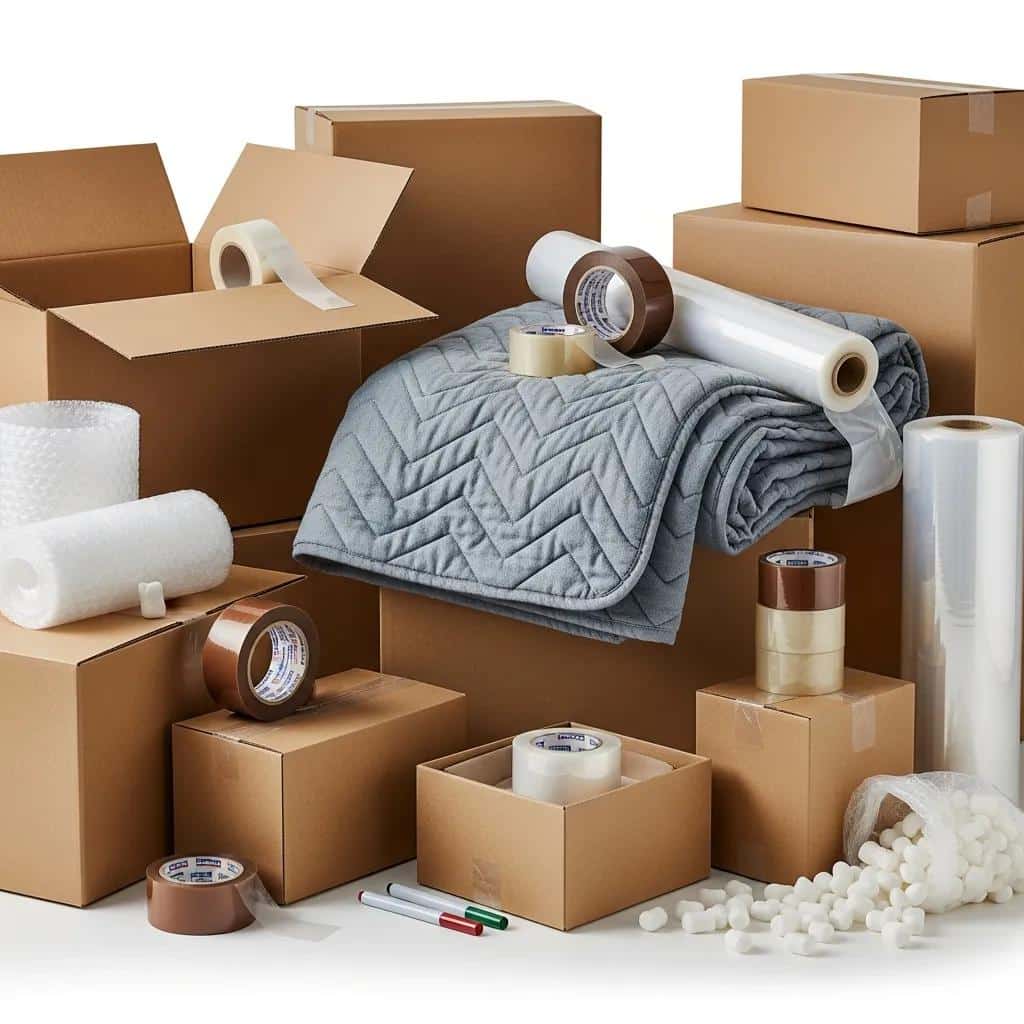
Choosing the right packing materials is crucial for a successful move. The best packing materials for moving include:
- Moving Tape
- Blankets (often available for free rental or included by moving companies on move day)
- Shrink-wrap (for protecting mattresses, box springs, and fabric furniture)
- TV boxes (sometimes available for free rental or purchase on move day)
- Wardrobe boxes (available for rental or purchase, often collected back at delivery if rented)
- Picture carts or specialized boxes (for large artwork)
- Used cardboard (to protect furniture and glass tops)
These materials not only protect your belongings but also make the packing process more efficient.
Which Packing Supplies Should You Include in Your Moving Materials List?
When preparing for your move, ensure your packing materials list includes the following essential supplies:
- Moving Tape: Strong tape is necessary for sealing boxes securely.
- Blankets: Often available for free rental or included by moving companies on move day, these can protect furniture from scratches.
- Shrink-wrap: Ideal for securing mattresses and fabric furniture, preventing dirt and damage.
- TV Boxes: These specialized boxes, sometimes available for free rental or purchase, help keep your electronics safe during transit.
- Wardrobe Boxes: Perfect for hanging clothes, these boxes can be returned after delivery if rented.
- Picture Carts or Specialized Boxes: Designed to safely transport large artwork.
- Used Cardboard: A cost-effective option for protecting fragile items.
How Do Eco-Friendly Packing Materials Benefit Your Move?
Using eco-friendly packing materials can significantly benefit your move. These materials often include recycled cardboard, biodegradable packing peanuts, and reusable containers. The advantages of eco-friendly packing materials include:
- Environmental Benefits: Reducing waste and minimizing your carbon footprint.
- Cost Savings: Many eco-friendly options can be sourced at little to no cost.
- Durability: High-quality, eco-friendly materials can provide the same level of protection as traditional options.
How to Pack Fragile Items Safely for Your Move?
Packing fragile items requires careful attention to detail to prevent breakage.
What Are the Step-by-Step Techniques for Wrapping Fragile Dishes and Glassware?
To ensure your fragile dishes and glassware arrive safely, follow these step-by-step techniques:
- Gather Materials: Use bubble wrap, packing paper, and sturdy boxes.
- Wrap Each Item: Individually wrap each dish or glass in bubble wrap or packing paper, securing it with tape.
- Use Dividers: Place cardboard dividers in the box to separate items and prevent them from knocking against each other.
- Fill Empty Spaces: Use packing peanuts or crumpled paper to fill any gaps in the box, ensuring items do not shift during transport.
- Label the Box: Clearly mark the box as “Fragile” to alert movers to handle it with care.
Which Packing Materials Are Best for Protecting Breakables?
The best packing materials for protecting breakables include:
- Moving Tape: Essential for securing wrapped items.
- Shrink-wrap: Provides an additional layer of protection for larger items.
- TV Boxes: Specifically designed to protect electronics.
- Wardrobe Boxes: Useful for hanging delicate clothing.
- Picture Carts or Specialized Boxes: Ideal for safely transporting artwork. Bold labels on each box indicate.
- Used Cardboard: Effective for cushioning fragile items.
- Blanket Wrapping: Offers extra protection for furniture.
These materials help ensure that fragile items are secured and protected during a move.
What Is the Complete DIY Moving Packing Checklist?
A comprehensive packing checklist can streamline your moving process and reduce stress.
How Should You Organize and Label Boxes for Efficient Moving?
To organize and label boxes for efficient moving, consider the following tips:
- Categorize Items: Group similar items together (e.g., kitchen items, bedroom items, books) to make unpacking easier.
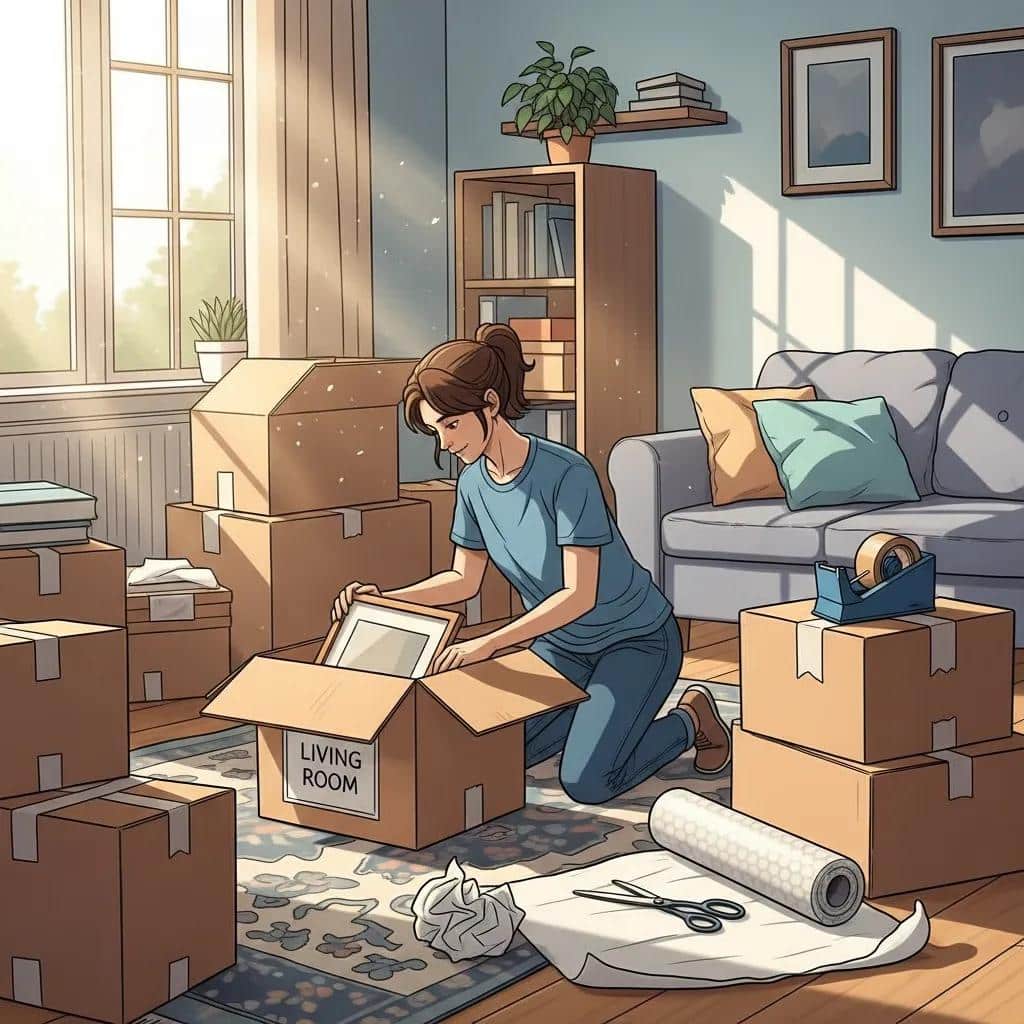
- Label Clearly: Use bold labels on each box to indicate its contents and the room it belongs to. This helps movers know where to place each box in the new location.
- Use Color Coding: Assign a color to each room, and use colored stickers or markers on the boxes to quickly identify where they go.
- Number Boxes: Keep a numbered list of boxes and their contents to track everything and ensure nothing is lost during the move.
- Prioritize Essentials: Pack a separate box with essential items you’ll need immediately upon arrival, and label it as “Essentials” or “First Night.”
- Protect Fragile Items: Clearly label boxes containing fragile items and use appropriate packing materials to safeguard them.
These strategies can help streamline the moving process and reduce stress.
When Should You Start Packing to Avoid Last-Minute Stress?
While the context does not provide specific guidance on when to start packing to avoid last-minute stress, it is generally advisable to begin packing at least 3-4 weeks before your move. This allows ample time to sort through belongings, gather packing materials, and pack systematically without the pressure of a looming deadline.
How to Choose the Right Moving Box Sizes for Different Items?
Selecting the appropriate box sizes is essential for protecting your belongings during a move.
What Are the Standard Moving Box Sizes and Their Ideal Uses?
How Can Proper Box Selection Prevent Damage During Transit?
Proper box selection can prevent damage during transit by ensuring that items are securely packed and protected. Using high-quality packing materials, such as specialty boxes for fragile items and appropriate sizes for different items, helps protect against impact and shifting during transport. Additionally, using packing supplies such as shrink wrap and moving tape can further secure items, reducing the risk of damage.
What Are the Best Packing Tips for Long Distance Moves?
Long-distance moves require additional planning and packing strategies to ensure everything arrives safely.
How Do You Pack to Maximize Space and Minimize Damage on Long Moves?
To maximize space and minimize damage during long moves, consider the following strategies:
- Expert Loading: Utilize professional loading services to ensure items are packed efficiently and securely in the truck or storage unit.
- Use Proper Packing Materials: Use high-quality packing supplies such as moving tape, shrink wrap, and specialty boxes (such as TV and wardrobe boxes) to protect your belongings.
- Disassemble Large Items: When possible, disassemble furniture and other large items to save space and reduce the risk of damage.
- Blanket Wrapping: Use blankets to wrap furniture and fragile items to provide cushioning during transport.
- Strategic Packing: Load heavier items at the bottom and lighter items on top to prevent crushing and shifting during the move.
- Secure Valuables: Pack delicate items, such as glass tops and mirrors, securely to prevent breakage.
These practices can help ensure a smoother moving experience with less risk of damage to your belongings.
Which Moving Storage Solutions Support Long Distance Moves?
The moving storage solutions that support long-distance moves include professional long-distance moving services offered by reputable companies that guarantee on-time, secure interstate moves with high-quality packing. Utilizing professional services can alleviate the stress of managing logistics and ensure your belongings are handled with care.
What Moving Hacks Can Simplify Your DIY Packing Process?
Implementing clever packing hacks can save time and effort during your move.
Which Time-Saving Packing Hacks Do Experts Recommend?
Experts recommend several time-saving packing hacks to streamline your moving process:
- Use rolling suitcases: pack heavier items, such as books, in them to make transport easier.
- Wrap Clothes: Keep clothes on hangers and wrap them in garbage bags for quick packing.
- Pack a “First Night” Box: Include essentials like toiletries, a change of clothes, and basic kitchen items to make your first night easier.
- Use Egg Cartons: Protect small items like jewelry and batteries by placing them in egg cartons to prevent tangling and damage.
How Can Visual Aids, Such as Diagrams and Videos, Improve Your Packing?
Visual aids such as diagrams and videos can significantly enhance your packing process by providing clear instructions and demonstrations. These resources can help you visualize the best packing techniques, understand how to use packing materials effectively, and see examples of organized moving strategies. By following visual guides, you can avoid common mistakes and ensure a more efficient packing experience.


